What Are the Common Problems With Tapping Machines? (and How Raveco Machines Solves Them)
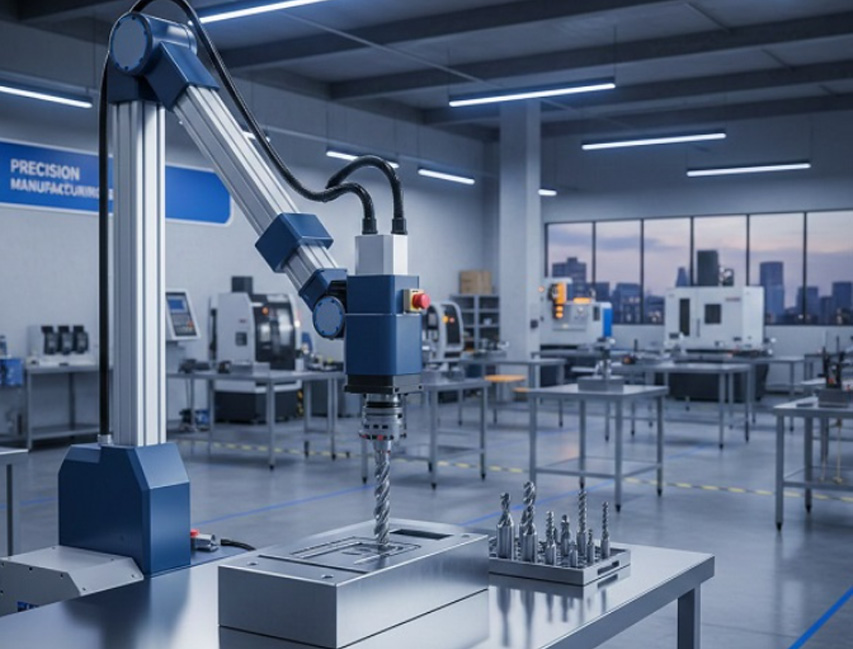
In any manufacturing or fabrication workflow, accurate tapping plays a critical role. Whether you’re producing automotive components, machinery parts, or steel structures, a perfectly cut internal thread ensures a strong, reliable connection. This is why tapping machines are essential in workshops and industries of all sizes.
But like any machine, tapping systems can face problems—leading to tap breakage, poor thread quality, increased downtime, and wasted material. The good news is that most of these issues are preventable with the right machine, proper setup, and consistent technique.
To help operators achieve flawless threading, Raveco Machines offers electric flexible-arm tapping solutions specifically engineered to reduce misalignment, prevent tool breakage, and deliver consistent torque across all thread sizes.
Let’s explore the most common tapping machine problems and how to solve them.
What Does a Tapping Machine Do?
A tapping machine is designed to cut internal threads in a pre-drilled hole. This process—known as tapping—uses a tool called a tap to create precise threads that allow bolts, screws, and fasteners to fit perfectly.
Tapping machines simplify thread-cutting and thread-forming tasks by automating movement, speed, and alignment. They are widely used in:
- Fabrication units
- Automotive component manufacturing
- Machining shops
- Steel and metal workshops
- General industrial production
Whether you’re working on mild steel, aluminum, cast iron, or stainless steel, tapping tools and tapping operations rely heavily on accuracy, torque stability, and machine rigidity.
The Most Common Problems With Tapping Machines
Operators across industries often face similar tapping issues. Below is a detailed breakdown of the most common problems and how to avoid them.
1 Tap Breakage / Tool Snapping
Tap breakage is one of the most frustrating tapping problems. It occurs due to:
- Misalignment between tap and hole
- Incorrect RPM or feed rate
- Poor-quality or brittle taps
- Excessive torque during threading
A broken tap inside a hole is difficult to remove and often ruins the part.
Solution:
Use a torque-controlled electric tapping arm with stable alignment—like the flexible-arm systems from Raveco Machines. Their SP-series machines maintain consistent torque and straight entry, drastically reducing tap breakage.
2 Poor Thread Quality (Rough, Incomplete, or Oversized Threads)
Bad threading leads to bolt slippage, part rejection, or assembly failure. This issue is usually linked to:
- Inadequate lubrication
- Incorrect RPM
- Dull or worn taps
- Material hardness mismatched with tool type
Solution:
Match your RPM to the tap size.
For example, the Raveco SP-0316 runs at 312 RPM, ideal for smaller taps (M3–M16), delivering smooth, precise threads every time.
3 Misalignment Between Tap & Workpiece
Manual tapping and low-quality machines often fail to maintain perfect perpendicular alignment. This results in:
- Uneven threads
- Tap breakage
- Increased wear on tools
Solution:
Flexible-arm tapping machines automatically align the tap at a consistent angle, reducing the risk of cross-threading.
4 Incorrect Speed & Feed (RPM Errors)
Using the wrong speed during tapping causes:
- Chatter marks
- Rough threads
- Excessive heat
- Early tap wear
Solution:
Choose tapping machines with variable speed motors that match the thread diameter and material hardness.
5 Chip Clogging in Blind Holes
Blind holes trap chips inside the cavity. When chips accumulate:
- The tap jams
- Tools break
- Threads become damaged
Solution:
Use spiral-flute taps and apply proper coolant to carry chips out of the hole.
6 Machine Vibration & Instability
Vibration occurs due to weak machine frames, poor mounting, or imbalanced loads. It leads to:
- Inaccurate threads
- Tap wandering
- Surface defects
Solution:
Stable tapping arms and a strong base reduce vibration, ensuring smoother operation.
7 Motor Overheating / Low Torque Issues
Cheap or underpowered machines struggle with:
- Heavy materials
- Large thread sizes
- Continuous tapping
This leads to overheating, torque loss, and reduced machine life.
Solution:
Ensure your tapping machine has adequate wattage—typically 600W to 1200W depending on application.
Tapping Troubleshooting Guide
A quick reference table for common issues:
| Problem | Cause | Solution |
|---|---|---|
| Tap breaking | Misalignment | Use rigid flexible-arm tapping machine |
| Rough threads | Low lubrication | Increase coolant flow |
| Oversized threads | High RPM | Adjust speed to recommended level |
| Motor strain | Hard material | Choose a higher torque tapping machine |
List of 5 Common Tapping Problems and Their Solutions
- Tap breakage → Improve alignment, reduce torque
- Poor thread finish → Use correct lubrication
- Feed mismatch → Adjust RPM and feed
- Workpiece slippage → Use a stable workholding setup
- Heat buildup → Reduce speed, increase coolant
A Main Issue With Current Tapping Methods Is…
Traditional tapping methods come with several limitations:
- Manual tapping lacks alignment consistency
- Pneumatic tapping struggles with torque accuracy
- Low-quality machines cannot maintain stable speed or direction
This is where electric flexible-arm tapping machines like Raveco’s SP-series stand out. They deliver precise torque control, perfect alignment, and reduced operator fatigue.
Types of Tapping Machines
There are four major categories:
- Manual tapping machines
- Pneumatic tapping machines
- CNC tapping centers
- Electric flexible-arm tapping machines (recommended for accuracy)
These tapping machine categories differ in speed, torque, ease of use, and accuracy.
Are T-Taps Reliable?
T-taps are reliable when:
- RPM is controlled
- Correct torque is applied
- Proper lubrication is used
Wrong speed or torque is the primary reason taps fail. Machines with controlled RPM significantly increase tap life and reduce tool expenses.
What Is a Tapping Machine Used For?
Tapping machines are used for:
- Internal thread creation
- Industrial manufacturing
- Fabrication and machining tasks
- Hole machining and finishing operations
Good tapping ensures strong thread strength and trouble-free assembly.
How Much Does a Tapping Machine Cost?
The price of a tapping machine depends on:
- Thread size capacity (M3–M16 vs. M6–M36)
- Motor power
- Machine radius
- Build quality
- Automation features
Although higher-quality machines cost more upfront, they save money by preventing tool breakage, reducing downtime, and improving productivity.
How Raveco Machines Helps Solve These Tapping Problems
1 Precision Through Universal Direction & Flexible Arm Design
The universal direction system in Raveco’s SP-series models ensures automatic alignment, eliminating uneven threads and tool snapping.
2 Correct Speed & Power for Each Thread Size
Examples:
SP-0316 (M3–M16) → 312 RPM
SP-0630 (M6–M30) → 142 RPM
SP-0636 (M6–M36) → 100 RPM
These speeds are engineered for optimal torque and perfect thread finish.
3 High Motor Power Prevents Overheating
With 600W to 1200W motors, Raveco machines offer consistent torque, preventing stalls and overheating.
4 Lightweight, Stable, and Easy to Position
With a weight of 32–40 kg and a radius of 1100–1200 mm, the machines are easy to move yet stable enough for heavy-duty industrial tapping.
When Should You Upgrade to a Better Machine?
Consider upgrading if you face:
- Tap breakage
- Poor thread quality
- Motor overheating
- Vibration issues
- Misalignment problems
Upgrading to Raveco Machines’ flexible-arm electric tapping systems is the most effective long-term solution. Their SP-series models (SP-0316 / SP-0630 / SP-0636) deliver consistent performance, superior alignment, and reliably smooth threads—perfect for demanding industrial environments.
Preventive Maintenance Tips
- Lubricate the tap and machine regularly
- Check tool wear before every shift
- Maintain straight tap entry
- Ensure proper chip evacuation
- Inspect arm stability and speed settings
Conclusion
Tapping problems like tap breakage, rough threads, vibration, and overheating can significantly affect production quality. Choosing the right machine and maintaining proper operating parameters is the key to eliminating these issues. Raveco Machines’ electric flexible-arm tapping solutions provide the stability, accuracy, and torque needed to achieve flawless threads in every application. If you want reliable tapping performance without repeated breakdowns or defects, upgrading to a high-quality electric tapping system is one of the smartest investments you can make.
Frequently Asked Questions About Tapping Machine Problems
1. What causes frequent tap breakage in tapping machines?
Tap breakage usually happens due to misalignment, incorrect RPM, inadequate lubrication, or excessive torque during threading. Using a torque-controlled electric tapping arm—like Raveco’s SP-Series—helps maintain correct alignment and stable torque, significantly reducing tool snapping.
2. Why do tapping machines produce rough or incomplete threads?
Poor thread quality is commonly caused by wrong speeds, worn taps, insufficient coolant, or mismatched tool selection. By setting the correct RPM for each tap size and using efficient lubrication, operators can achieve smooth and accurate threads with minimal defects.
3. How can I prevent misalignment when tapping?
Misalignment occurs when the tap enters the pre-drilled hole at an incorrect angle. Flexible-arm tapping machines automatically align the tap, ensuring perpendicular entry. Raveco’s universal-direction arms are specifically engineered to maintain perfect alignment and avoid cross-threading.
4. What tapping machine is best for preventing downtime?
Electric flexible-arm tapping machines are ideal for minimizing downtime because they offer stable torque, controlled RPM, and precise alignment. Models like Raveco’s SP-0316 or SP-0630 provide consistent power, reduced vibration, and smooth operation—making them suitable for high-volume industrial use.