Servo Tapping Machines vs Automatic Tapping Machines: Which One Solves Your Production Problems?
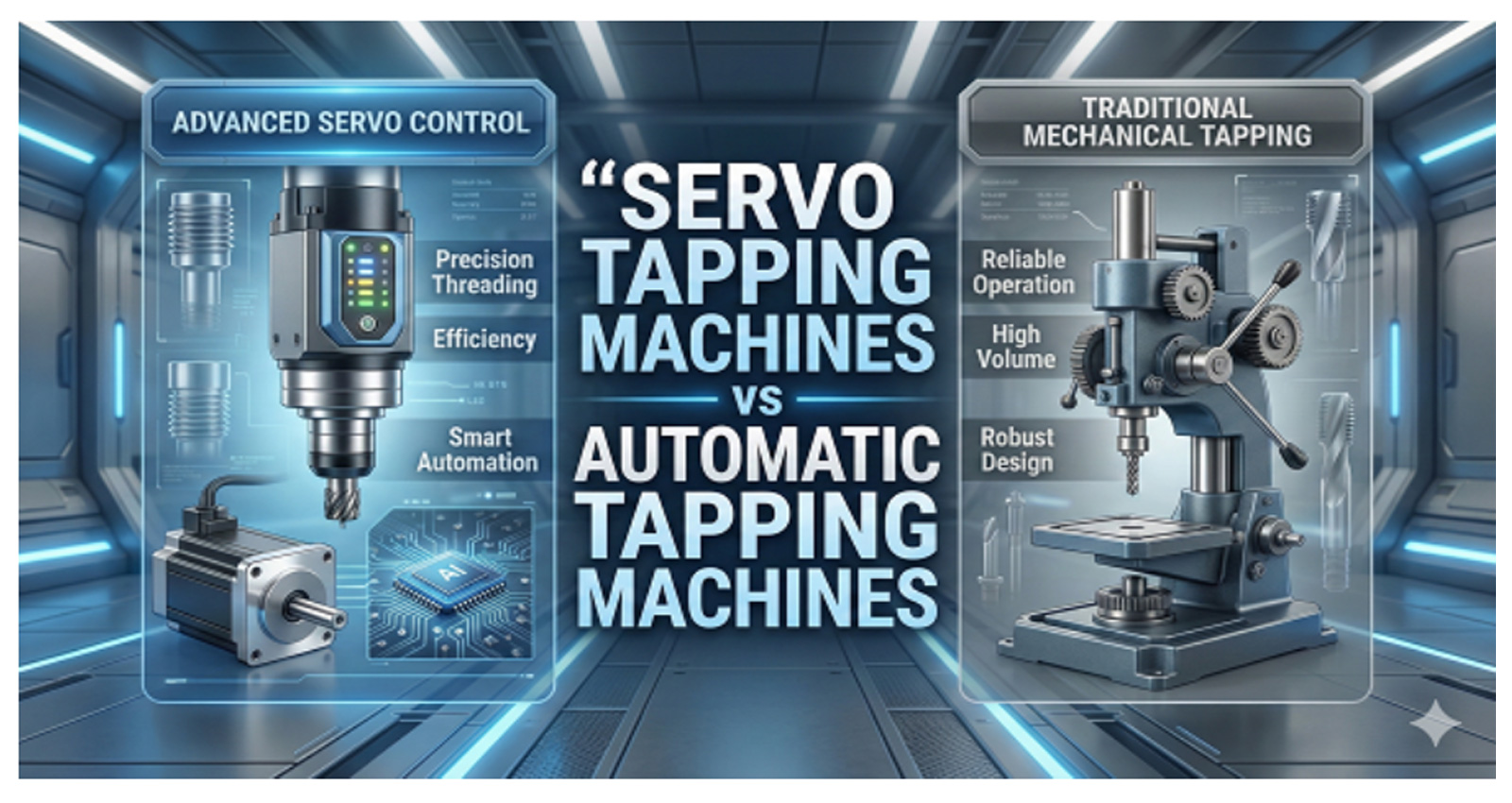
Choosing the Right Tapping Technology for Modern Production
In today’s manufacturing environment, tapping requirements are becoming more demanding than ever. Whether you’re producing automotive components, electrical fittings, or precision parts, one thing remains constant: you need clean, accurate, consistent threads—every single time.
But most factories struggle with the same tapping problems:
- Tap breaking again and again
- Tap breaking again and again
- Threads not forming properly
- Inconsistent depth
- High rejection
- Slow production
- Heavy dependency on operator skill
This is where choosing the right tapping machine becomes crucial.
Many manufacturers compare servo tapping machines and automatic tapping machines, but they often don’t know which one actually solves their production issues.
Manufacturers often approach RavecoMachines after facing long-term issues with conventional tapping setups, looking for a machine that truly solves accuracy and consistency challenges. Let’s break it down in a simple, beginner-friendly way.
What Is an Automatic Tapping Machine?
An automatic tapping machine is typically powered by mechanical or pneumatic drive. These machines are designed for simple, repetitive tapping operations where precision is not the top priority.
Where automatic tapping machines work well:
- Basic threading
- Large quantity, low-precision work
- Parts that don’t require strict quality standards
But here are the limitations:
- No torque control → leads to frequent tap breakage
- Fixed speed → cannot adjust for different materials
- Operator adjustments required → inconsistent results
- Rigid cycle speeds → not suitable for varying hole depths
Because these machines lack intelligent control, they often cause:
- Thread inaccuracy
- Higher rejection
- Tool wear and breakage
- Downtime due to maintenance
They work fine for “okay quality” jobs—but not when your customer demands “zero-defect production.”
What Is a Servo Tapping Machine? (Why It’s Modern Technology)
A servo tapping machine is built with a servo motor and a programmable controller. It is designed for industries that require precision, consistency, and long-term reliability.
Core components include:
- Servo motor
- Digital feedback system
- Depth and torque monitoring
- Programmable speed control
Why servo technology is preferred today:
- Perfect thread accuracy
- Exact depth control
- Consistent tapping—regardless of operator skill
- Lower rejection rates
- Reduced tool wear due to torque control
- Better productivity and cycle time
- Energy-efficient operation
Servo tapping machines simply outperform older tapping methods.
PROBLEM BREAKDOWN: What Issues Do Factories Actually Face?
Here are the real-world tapping issues most factories struggle with:
- Threads not forming properly
- Tap breaking frequently
- Inconsistent depth
- Increased rejection
- Slow production cycles
- Dependency on skilled operators
- Using a drill machine for tapping, causing inaccuracy
- Inefficient manual tapping
- Poor results when tapping aluminum, SS, MS, brass, etc.
Now let’s evaluate which machine—servo or automatic—actually solves these problems.
Servo vs Automatic: Feature-by-Feature Comparison
1. Thread Accuracy & Precision
- Automatic: Depends heavily on operator skill
- Servo: Digitally controlled depth and feed → high repeatability
2. Tap Breakage & Tool Life
- Automatic: No torque control → high breakage
- Servo: Intelligent torque monitoring protects the tap
Production Speed & Cycle Time
- Automatic: Fixed speed, slower cycles
- Servo: Programmable speed → faster, optimized cycle time
Rejection Rates
- Automatic: Variation leads to inconsistency
- Servo: Stable output → extremely low rejection
Flexibility for Different Sizes & Materials
- Automatic: Limited adjustment
- Servo: Easily adaptable for aluminum, SS, MS, brass, plastics, etc. n
Energy Consumption
- Automatic: Runs continuously → more power
- Servo: Consumes energy only when in operation
Comparison Table
| Feature | Automatic Tapping Machine | Servo Tapping Machine |
|---|---|---|
| Precision | Low–Medium | High |
| Tap Breakage | Frequent | Very Low |
| Speed | Fixed | Programmable |
| Rejection % | High | Very Low |
| Material Flexibility | Limited | Excellent |
| Energy Usage | High | Low |
| Operator Dependency | High | Minimal |
Cost Comparison: Which Machine Gives Better ROI?
Automatic tapping machines look cheaper initially—but the hidden cost is huge.
Automatic machine hidden costs:
- High rejection percentage
- Frequent tool replacement
- Slower cycle time
- Higher power consumption
- Constant operator adjustments
- More downtime and maintenance
Servo machines give long-term savings:
- Fewer taps broken
- Lower rejection
- Higher productivity
- Less dependency on skilled operators
- Consistent thread quality
So even though servo tapping machines cost more upfront, they give a much higher ROI over time.
Which Machine Is Right for Your Production Problems?
Here’s a simple guide:
Choose an automatic tapping machine if:
- You need only basic threads
- Accuracy is not important
- Your part tolerances are loose
- You are producing very simple, repetitive components
Choose a servo tapping machine if:
- Accuracy is important
- Your customer demands consistent quality
- You want to reduce rejection
- You face tap breakage
- You want predictable cycle time
- You tap different materials frequently
- You want long-term cost savings
For modern manufacturing standards, servo tapping is the clear winner.
How Raveco Machines Helps You Solve These Problems
RavecoMachines specializes in advanced servo tapping machines designed specifically to solve industry pain points that conventional tapping systems cannot.
Why manufacturers trust Raveco for tapping:
- Custom-engineered servo tapping solutions
- Designed for automotive, electronics, aerospace, engineering, and more
- Intelligent torque control → low tool breakage
- High-speed tapping without compromising accuracy
- Perfect for blind and through holes
- Energy-efficient and built for long-term reliability
If your production line is slowed by inaccurate threads, high rejection, or unpredictable tap breakage, Raveco Machines provides tailored servo tapping solutions built specifically for your component requirements.
Step-by-Step Guide: How to Choose the Right Machine from Raveco Machines
Step 1: Identify your tapping problems
- Rejection %
- Tool breakage
- Cycle time
- Thread variation
Step 2: Share your component drawings
Raveco engineers analyze:
- Hole size
- Thread pitch
- Material
- Production volume
Step 3: Receive a custom recommendation
- Suggested machine model
- Automation level
- Tooling suggestions
- Cycle time and ROI estimations
Step 4: Installation & Training
Raveco team ensures:
- Proper installation
- Operator training
- Program setup
Step 5: Ongoing Support
- Maintenance
- Troubleshooting
- Upgrades
This ensures your tapping process remains stable and consistent for years.
Conclusion: The Clear Winner for Modern Manufacturing
Servo tapping machines clearly outperform automatic tapping machines in all critical areas—precision, speed, reliability, tool life, and energy-efficiency. Automatic machines work only for basic, low-precision tapping.
But if you want to eliminate tapping problems permanently and move toward zero-defect production, servo tapping technology is the right investment. RavecoMachines provides advanced servo tapping solutions designed to deliver consistent, high-accuracy threading for the long term.
FAQs
1. Which machine is better for stainless steel?
A servo tapping machine is ideal because it provides controlled torque and speed for tough materials.
2. Will a servo tapping machine reduce tap breakage?
Yes. Servo machines have torque monitoring, which drastically lowers tool breakage.
3. Is an automatic tapping machine good for precision work?
Not recommended. It cannot maintain consistent depth and speed.
4. Can servo tapping machines handle different thread sizes?
Yes. They are highly flexible and can be programmed for various sizes and materials.
5. Are servo tapping machines expensive to maintain?
No. Their design reduces tool wear and downtime, making them cheaper to maintain long-term.