Why Choosing the Right Tapping Machine Matters in 2025
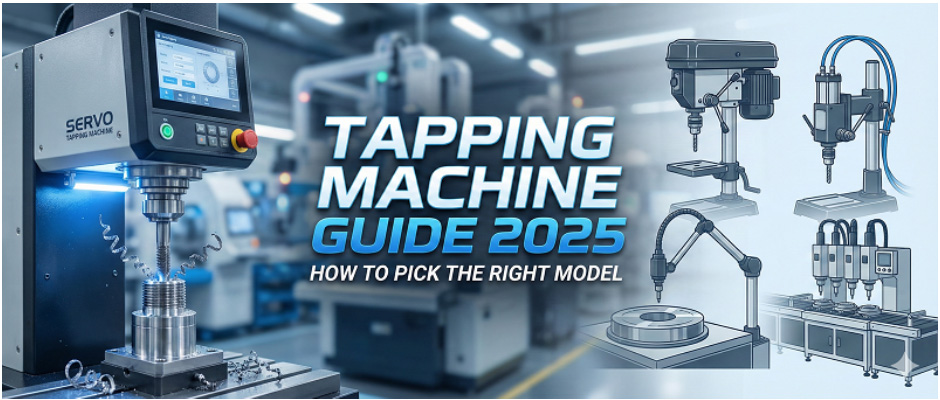
Choosing the right tapping machine can dramatically improve your workshop’s productivity, accuracy, and operational cost-effectiveness. In 2025, manufacturers face rising quality demands, tighter tolerances, and increased pressure to automate production. Whether you run a small workshop or a large-scale manufacturing line, selecting the correct tapping machine is essential for long-term success.
This guide explains everything you need to know before buying—types of tapping machines, when to choose electric vs servo vs pneumatic, price considerations for automatic tapping machines, and which model best suits your production needs.
The manufacturing industry today is evolving faster than ever. With CNC machining, robotic automation, EV components, precision engineering, and high-volume production becoming the norm, tapping accuracy and consistency are critical.
A high-quality tapping machine provides:
- Higher threading accuracy
- Consistent torque control
- Reduced tap breakage
- Faster cycle times
- Lower rejection rates
- Longer tool life
- Higher operator safety
Choosing the wrong machine, however, can result in frequent tap breakage, misaligned threads, reduced productivity, and higher scrap.
This guide helps you avoid costly mistakes and pick the most suitable machine for your workshop in 2025.
What Is a Tapping Machine? (Basics & Industrial Role)
A tapping machine is used to create internal threads (tapped holes) in materials like steel, aluminum, cast iron, plastic, or brass. Modern tapping machines offer features like torque control, variable speed, automatic depth control, and flexible or rigid tapping systems.
Industries using tapping machines include:
- Automobile & EV components
- Electrical fittings
- Aerospace parts
- Fabrication & metalworking
- Machinery manufacturing
- Electronics & consumer appliances
- Hydraulic & pneumatic equipment
Key Factors to Consider Before Choosing a Tapping Machine
Before selecting any tapping machine, evaluate these critical factors:
✔ Thread Size & Material Hardness
Hard materials (stainless steel, alloy steel) require servo or electric tapping machines with precise torque control.
✔ Production Volume
- Low volume → Arm tapping machine, pneumatic tapping machine
- Medium volume → Electric tapping machine
- High production → Automatic tapping machine
✔ Accuracy & Precision Requirements
High-precision parts benefit most from servo tapping machines or vertical tapping machines.
✔ Operator Skill Level
Automated or servo-driven models reduce human error.
✔ Budget & ROI
A slightly higher initial investment often results in long-term savings through:
- Lower tap breakage
- Reduced rejection
- Higher consistency
✔ Machine Durability & Maintenance
Check availability of:
- Spare parts
- After-sales support
- Local service
Reliable tapping machine manufacturers ensure quick maintenance support, reducing downtime.
Electric Tapping Machines
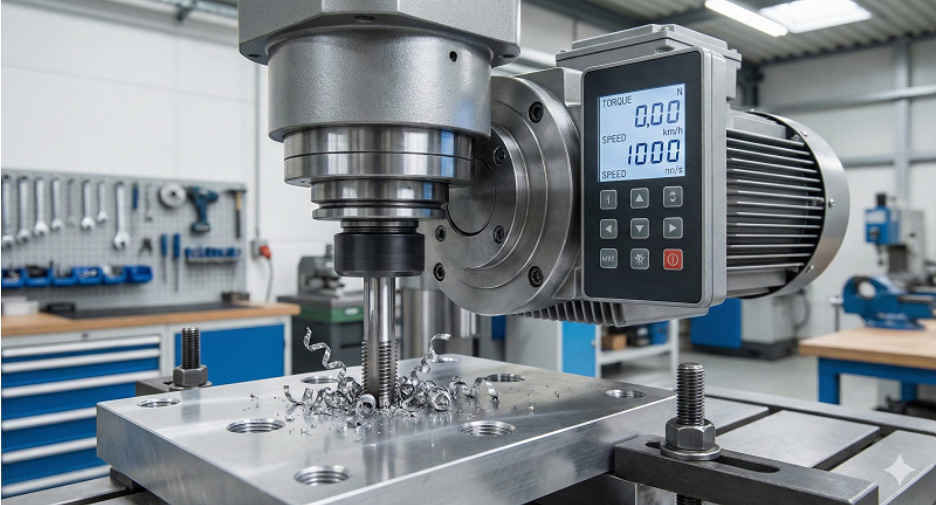
Electric tapping machines are versatile and widely used for general workshop needs.
How Electric Tapping Machines Work
They use an electric motor to control spindle rotation, offering adjustable speed and smoother tapping.
Advantages of Electric Tapping Machines
- Easy to operate
- Good speed control
- Lower power consumption
- Ideal for small to medium production
- Affordable pricing
Limitations
- Not suitable for heavy-duty threading
- Less precise compared to servo models
Best For
- General fabrication
- Machine shops
- Mild steel, aluminum, plastic parts
Servo Tapping Machines
In 2025, servo tapping machines are among the most in-demand due to precision and torque control.
Why Servo Tapping Machines Lead in 2025
Servo motors provide:
- Accurate torque
- Precise depth control
- Smooth reversal
- Low tap breakage
Key Advantages of Servo Tapping Machines
- Ideal for high-precision threading
- Best for hard materials
- Perfect for repeated production cycles
- Low rejection rates
Best For
- Automotive & EV components
- Aerospace parts
- High-accuracy production lines
If your priority is precision and consistent performance, a servo tapping machine is the best choice.
Pneumatic Tapping Machines
Pneumatic tapping machines operate using compressed air and are known for their speed.
Advantages of Pneumatic Tapping Machines
- High tapping speed
- Lightweight & flexible
- Safe overload protection
- Affordable initial cost
Best Use Cases
- Fast-paced production
- Medium threading work
- Large workshops using air compressors
Limitations
- Less accuracy than servo machines
- Depends on air pressure stability
Vertical Tapping Machines
A vertical tapping machine is perfect for operations requiring stability and high alignment accuracy.
Benefits
- Rigid structure
- Perfect for precision components
- Stable vertical tapping motion
- Extremely consistent hole alignment
Ideal For
- Mass production
- Precision machining
- Automotive suppliers
- Component manufacturers
Arm & Flexible Arm Tapping Machines
Arm tapping machines allow the operator to move freely around large or awkward workpieces.
Advantages:
- Great reach & flexibility
- Ideal for large plates or heavy parts
- Quick positioning
Flexible Arm Tapping Machine
A better, upgraded version of the arm tapping machine.
Advantages:
- Smooth multi-directional movement
- Higher operator comfort
- Easy threading of oversized or fixed workpieces
- Reduces operator fatigue
Best For
- Fabrication units
- Heavy castings
- Large metal plates
- Irregular workpieces
Flexible arm tapping machines are trending in 2025 due to rising demand for ergonomic and scalable tapping solutions.
Automatic Tapping Machines
Automatic tapping machines are designed for high-volume production with minimal human involvement.
Benefits of Automation
- Unmatched speed
- Consistent tapping depth
- Zero operator errors
- Multi-spindle capabilities
- Lowest rejection rate
Automatic Tapping Machine Price Factors
Prices vary based on:
- Machine type (single spindle, multi-spindle)
- Servo or electric configuration
- Automation level (PLC/CNC)
- Custom fixtures
- Thread size capacity
While the initial investment is higher, ROI quickly improves due to reduced labor costs and improved output.
Best For
- Large factories
- High-volume production
- Automotive & electrical industries
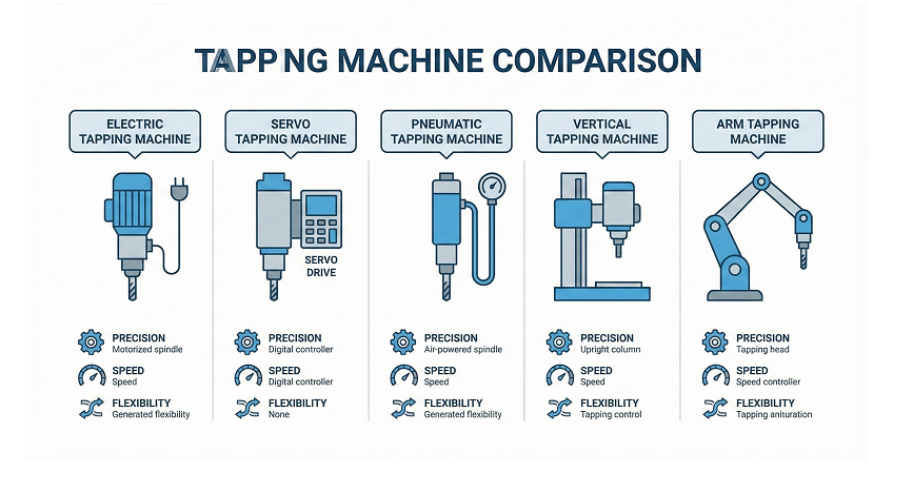
Comparison Chart: Electric vs Servo vs Pneumatic vs Arm vs Automatic
| Machine Type | Precision | Speed | Best For | Cost | Production Scale |
|---|---|---|---|---|---|
| Electric Tapping Machine | Medium | Medium | Small–Medium shops | Affordable | Medium |
| Servo Tapping Machine | Very High | Medium–High | Automotive, EV, Aerospace | Higher | Medium–High |
| Pneumatic Tapping Machine | Medium | Very High | Fast operations | Affordable | Medium |
| Vertical Tapping Machine | High | Medium | Precision machining | Moderate | Medium–High |
| Arm Tapping Machine | Medium | Medium | Large workpieces | Affordable | Low–Medium |
| Flexible Arm Tapping Machine | Medium–High | Medium | Heavy or awkward parts | Moderate | Medium |
| Automatic Tapping Machine | Very High | Very High | Mass production | High | High |
Choosing the Right Model for Your Workshop Size
For Small Workshops
- Electric tapping machine
- Pneumatic tapping machine
- Arm tapping machine
For Medium Manufacturing Units
- Servo tapping machine
- Vertical tapping machine
- Flexible arm tapping machine
For Large Production Facilities
- Automatic tapping machine
- Multi-spindle tapping system
Common Mistakes to Avoid When Buying a Tapping Machine
With a weight of 32–40 kg and a radius of 1100–1200 mm, the machines are easy to move yet stable enough for heavy-duty industrial tapping.
- Choosing too low a torque machine for hard materials
- Ignoring tap breakage & maintenance cost
- Selecting a low-quality tapping machine manufacturer
- Not planning for future production growth
- Ignoring after-sales service availability
Maintenance Tips for Higher Accuracy & Longer Machine Life
- Lubricate moving components regularly
- Inspect tap wear and replace timely
- Maintain stable electrical/air supply
- Keep machine clean from chips
- Train operators periodically
- Use high-quality taps suited to material
Conclusion: Making the Best Machine Choice for 2025 and Beyond
Choosing the right tapping machine in 2025 comes down to understanding your workshop’s needs—precision, speed, production volume, and budget. Whether you need a servo tapping machine for accuracy, a pneumatic model for speed, or an automatic tapping machine for mass production, selecting the right machine will significantly improve your output quality and reduce tap breakage.
Raveco Machines offers a complete range of tapping solutions engineered for durability, stability, and performance. If you want reliable machines that improve your threading efficiency:
👉 Explore the full tapping machine range:
https://www.ravecomachines.com👉 Speak with a technical expert:
https://www.ravecomachines.com/contact.html👉 Learn more about why workshops prefer Raveco:
https://www.ravecomachines.com/about.htmlYour perfect tapping machine for 2025 is just one click away.
FAQs
1. Which tapping machine is best for beginners?
Electric tapping machines are the easiest to use and maintain.
2. Is a servo tapping machine worth the cost?
Yes—if your work requires high precision, consistent torque, and minimal tap breakage.
3. What affects automatic tapping machine price?
Automation level, spindle configuration, thread size, and customization.
4. Which machine gives the least tap breakage?
Servo tapping machines and automatic tapping machines.
5. Can a flexible arm tapping machine replace a vertical tapping machine?
Not fully—vertical machines offer higher rigidity, while flexible arm machines offer mobility.